Welcome! This comprehensive guide details the CAA-500 Mark II’s capabilities‚ ensuring optimal performance and a thorough understanding of its features.
What is the CAA-500 Mark II?
The CAA-500 Mark II is a highly versatile and advanced communication receiver designed for a wide range of applications. It’s engineered to deliver exceptional performance in receiving various signals‚ including AM‚ FM‚ and SSB transmissions.
This receiver boasts superior sensitivity and selectivity‚ allowing users to clearly isolate and monitor desired signals even in challenging radio environments. Its robust construction and intuitive interface make it suitable for both professional and hobbyist use.
Furthermore‚ the CAA-500 Mark II incorporates cutting-edge digital signal processing (DSP) technology‚ enhancing audio clarity and reducing interference. It’s a powerful tool for monitoring‚ listening‚ and analyzing radio communications.
Target Audience for this Manual
This manual is specifically crafted for individuals who own or operate the CAA-500 Mark II communication receiver. It caters to a diverse audience‚ encompassing both seasoned radio professionals and enthusiastic hobbyists alike.
Whether you are a technician responsible for maintaining communication systems‚ a shortwave listener exploring the airwaves‚ or simply someone new to the world of radio receivers‚ this guide provides the necessary information to effectively utilize the CAA-500 Mark II.
No prior extensive knowledge of radio technology is assumed; explanations are presented in a clear and accessible manner. We aim to empower all users to unlock the full potential of this sophisticated device.

Getting Started with Your CAA-500 Mark II
Let’s begin! This section guides you through the initial setup process‚ ensuring a smooth and successful introduction to your new receiver.
Unboxing and Initial Inspection
Carefully unpack your CAA-500 Mark II from its shipping container. Retain the original packaging for potential future transport or warranty claims. Inspect all components for any visible signs of damage incurred during shipping. This includes the main unit‚ antenna‚ power adapter‚ and any included accessories.
Verify that all listed items are present according to the included packing list. If any components are missing or appear damaged‚ immediately contact your retailer or our customer support team. Do not attempt to operate a damaged unit. Visually check the unit for scratches‚ dents‚ or loose parts. A quick inspection now can prevent issues later. Ensure the antenna connector is secure and undamaged.
Component Identification
Let’s identify the key components of your CAA-500 Mark II. Firstly‚ the main unit houses the control panel‚ display screen‚ and internal circuitry. Secondly‚ the antenna connects to the SMA connector on the unit’s side‚ enabling signal reception. Thirdly‚ the power adapter provides necessary power; ensure voltage compatibility.
Additionally‚ you’ll find a belt clip for portable operation and a speaker for audio output. The control panel features buttons for power‚ volume‚ mode selection‚ and scanning. The display screen shows frequency‚ signal strength‚ and selected mode. Refer to the diagram included in this manual for a visual representation of each component and its location.

Operational Basics
Mastering the fundamental operations of the CAA-500 Mark II is crucial for effective use‚ allowing seamless navigation and reliable communication experiences.
Powering On and Off
To power on the CAA-500 Mark II‚ firmly press and hold the red power button located on the unit’s top panel for approximately two seconds. You will observe the LCD screen illuminate‚ displaying the startup sequence and indicating the device is initializing.
A brief self-test will run‚ confirming the functionality of key components. Once completed‚ the radio will default to the last selected channel and mode.
To power off the device‚ repeat the process – press and hold the red power button for two seconds. The screen will display a shutdown message before completely turning off.
Avoid rapidly pressing the power button‚ as this may cause unintended operation or system errors. Ensure the unit is fully powered down before disconnecting or replacing the battery.
Understanding the Control Panel
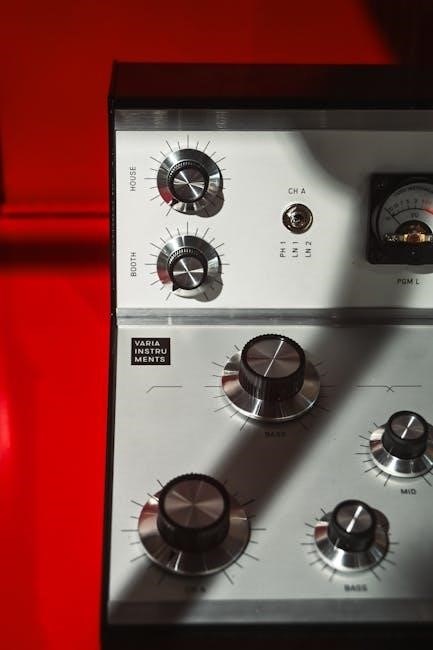
The CAA-500 Mark II’s control panel is intuitively designed for ease of use. Centrally located is the LCD display‚ providing crucial information like frequency‚ mode‚ and signal strength.
Below the display‚ you’ll find the rotary dial – used for frequency selection and menu navigation. Surrounding the dial are dedicated buttons for power‚ volume adjustment‚ and mode selection (AM/FM/Scan).

To the right are programmable buttons for quick access to frequently used channels. The microphone jack and external antenna connector are situated on the unit’s side.
Familiarize yourself with each control’s function before operation to maximize the radio’s capabilities and ensure a seamless user experience.
Basic Mode Selection
The CAA-500 Mark II offers three primary operating modes: AM‚ FM‚ and Scan. To switch between these‚ use the ‘Mode’ button on the control panel. Each press cycles through the available options.
AM mode is ideal for receiving distant broadcasts‚ while FM provides higher fidelity audio for local stations. The ‘Scan’ function automatically searches for available signals across the selected band.
During scanning‚ the radio pauses briefly on each detected signal‚ allowing you to assess its clarity. Pressing the ‘Mode’ button again during a scan will lock onto the current frequency.
Experiment with each mode to determine the best reception based on your location and desired listening experience.

Advanced Features & Functions
Unlock the CAA-500 Mark II’s full potential with detailed frequency control‚ memory channel options‚ and refined audio clarity adjustments.
Frequency Tuning and Scanning
Precise Frequency Control: The CAA-500 Mark II allows for both direct frequency input via the keypad and fine-tuning using the control knob. Ensure you are operating within legally permitted frequency bands for your region. Incorrect frequency usage can lead to interference or legal repercussions.
Scanning Modes: Utilize the scan function to automatically search for active signals across a specified frequency range. Select from various scan types – continuous‚ memory‚ and programmed band scans – to tailor the search to your needs. Adjust the scan speed for optimal performance in different environments.
Step Size Adjustment: Customize the frequency step size (e.g.‚ 5kHz‚ 10kHz‚ 25kHz) to match the modulation type and channel spacing of the signals you are monitoring. This ensures accurate tuning and reception.
Memory Channel Management
Storing Favorite Frequencies: The CAA-500 Mark II boasts extensive memory capacity for storing frequently used frequencies. To save a frequency‚ tune to the desired channel and press the ‘Memory’ button‚ then select an available memory slot.
Memory Channel Editing: Easily edit stored channels – rename them for quick identification‚ modify the frequency‚ or adjust settings like squelch level. Access the memory edit function through the main menu.
Memory Bank Organization: Organize your saved channels into logical banks for efficient access. Create banks based on service type (e.g.‚ aviation‚ marine‚ public safety) or geographical location. Memory banks enhance usability.
Squelch Control and Noise Reduction
Understanding Squelch: The squelch control minimizes unwanted background noise‚ allowing you to hear only transmissions above a certain signal strength. Adjusting the squelch level is crucial for clear audio.
Adjusting Squelch Levels: Access the squelch control via the menu. Lower settings capture weaker signals but include more noise; higher settings reduce noise but may miss faint transmissions. Experiment to find the optimal balance.
Noise Reduction Feature: The CAA-500 Mark II incorporates a digital noise reduction algorithm. Enable this feature in the settings menu to further suppress static and interference‚ improving overall audio clarity during challenging reception conditions.

Troubleshooting Common Issues
Facing problems? This section provides solutions for typical CAA-500 Mark II issues‚ guiding you through diagnostics and effective resolution steps.
No Power – Diagnostic Steps
Initial Check: Verify the battery is correctly installed‚ observing proper polarity. Attempt charging the battery using the provided adapter for at least four hours‚ ensuring a stable power source. Power Button: Confirm the power button is fully depressed and held for a brief moment. A soft click often indicates activation.
Fuse Inspection: Locate the fuse compartment (refer to Component Identification) and visually inspect the fuse for any signs of damage or breakage. Replace if necessary with the specified amperage. Connection Ports: Examine all connection ports for debris or corrosion that might impede power delivery. Gently clean with a dry cloth.
External Power: If applicable‚ test with an alternative power source to rule out adapter failure. If the unit still fails to power on‚ professional servicing may be required.
Poor Reception – Solutions
Antenna Check: Ensure the antenna is securely connected to the CAA-500 Mark II. Verify the antenna is of the correct type and frequency range for desired signals. Try extending or repositioning the antenna for optimal signal capture. Environmental Factors: Reception can be affected by surrounding structures‚ terrain‚ and atmospheric conditions.
Frequency Selection: Confirm you are tuned to the correct frequency for the desired broadcast. Utilize the scanning function to locate stronger signals. Squelch Adjustment: Reduce the squelch level (see Squelch Control section) to capture weaker signals‚ but be aware of increased noise.
Interference: Move away from potential sources of interference‚ such as electronic devices.
Display Errors – Interpretation and Fixes
“Low Battery” indicates insufficient power; recharge or replace batteries immediately. “Antenna Error” suggests a disconnected or faulty antenna – check connections and antenna integrity. “Frequency Lock” means the selected frequency is unavailable or locked; choose another;
“Memory Full” signifies the memory channels are at capacity; delete unused channels to free space. “System Error” requires a unit reset – consult the troubleshooting section for reset instructions. If errors persist‚ note the error code and contact customer support.
Dim Display: Adjust brightness settings or check battery level. A consistently blank display may indicate a hardware fault.
Maintenance and Care
Proper care extends the CAA-500 Mark II’s lifespan; regular cleaning‚ mindful battery handling‚ and correct storage are vitally important practices.
Cleaning Procedures
Maintaining a clean CAA-500 Mark II ensures optimal performance and longevity. Regularly wipe down the exterior casing with a soft‚ slightly damp cloth. Avoid abrasive cleaners or solvents‚ as these can damage the finish and potentially enter the internal components.
For stubborn dirt or grime‚ a mild soap solution can be used‚ but ensure the cloth is only damp‚ not wet‚ and thoroughly dry the unit afterward. Pay particular attention to the control panel and display screen‚ gently removing any dust or fingerprints.
Never disassemble the unit for cleaning purposes. Avoid spraying any liquids directly onto the device; always apply to the cloth first. Regularly inspect the antenna connector for debris and clean carefully with a dry cotton swab. Proper cleaning contributes significantly to the reliable operation of your CAA-500 Mark II.
Battery Management
Optimizing battery life for your CAA-500 Mark II is crucial for uninterrupted operation. Utilize the provided charger exclusively; using incompatible chargers may damage the battery or the unit. Avoid fully discharging the battery‚ as this can reduce its lifespan.
When storing the unit for extended periods‚ charge the battery to approximately 50-75% capacity. Store the CAA-500 Mark II and battery in a cool‚ dry place‚ away from direct sunlight and extreme temperatures.
Do not expose the battery to fire or excessive heat. If the battery exhibits signs of swelling or damage‚ discontinue use immediately and dispose of it responsibly according to local regulations. Proper battery management ensures reliable performance and extends the overall life of your CAA-500 Mark II.
Storage Guidelines
Proper storage significantly impacts the longevity of your CAA-500 Mark II. When not in use‚ store the unit in a clean‚ dry environment‚ shielded from dust‚ moisture‚ and extreme temperatures. Avoid storing it in direct sunlight or near heat sources.
We recommend using the original packaging for storage‚ providing optimal protection against physical damage. If the original packaging isn’t available‚ use a padded case or wrap the unit securely in protective material.
Ensure the battery is partially charged (around 50-75%) before long-term storage. Periodically check the battery level and recharge if necessary. Avoid placing heavy objects on top of the CAA-500 Mark II during storage to prevent potential damage.
Technical Specifications
Detailed specifications for the CAA-500 Mark II are listed below‚ providing crucial information regarding its performance and physical characteristics.
Frequency Range
The CAA-500 Mark II boasts an exceptionally wide frequency coverage‚ enabling versatile communication and monitoring across numerous bands. It spans from 25 MHz to 1.7 GHz‚ encompassing a significant portion of the HF‚ VHF‚ and UHF spectrums. Specifically‚ the receiver tunes from 25;000 MHz to 1699.995 MHz‚ while the transmitter operates within designated segments of the VHF and UHF bands‚ adhering to regional regulations.
This broad range allows users to listen to amateur radio‚ marine communications‚ aviation broadcasts‚ public safety channels‚ and various other signals. However‚ always verify local laws and licensing requirements before transmitting on any frequency. Operating outside permitted bands is strictly prohibited and may result in legal penalties. The device supports both AM‚ FM‚ and SSB modulation modes across its operational spectrum.
Power Output
The CAA-500 Mark II is capable of delivering up to 5 Watts of RF power on both VHF and UHF bands. This output level provides a good balance between communication range and efficient battery consumption. Power output is adjustable in three steps: Low (1 Watt)‚ Medium (2.5 Watts)‚ and High (5 Watts). Selecting the appropriate power level is crucial for maximizing talk time and minimizing interference to other users.
Always start with the lowest power setting necessary to establish reliable communication. Increasing power unnecessarily can reduce battery life and potentially cause unwanted signal spillover. The actual radiated power may vary slightly depending on antenna efficiency and environmental conditions. Regularly check battery levels to ensure sufficient power for transmission.
Dimensions and Weight
Understanding the physical characteristics of the CAA-500 Mark II is important for portability and accessory compatibility. The unit measures 130mm (Height) x 60mm (Width) x 35mm (Depth)‚ excluding the antenna. These compact dimensions allow for comfortable handheld operation and easy storage. The total weight of the radio‚ including the standard battery pack‚ is approximately 320 grams.
Note that the weight may vary slightly depending on the specific battery used. The CAA-500 Mark II is designed to be robust yet lightweight‚ ensuring comfortable use during extended periods. Always refer to the included diagrams for precise dimensional illustrations and mounting point locations.
Safety Information
Prioritize safety! Read all warnings and instructions carefully before operating the CAA-500 Mark II to prevent hazards and ensure responsible use.
RF Exposure Guidelines
Important Radio Frequency (RF) Exposure Information: To ensure compliance with regulatory standards and maintain user safety‚ adhere to the following guidelines when operating the CAA-500 Mark II. This device has been tested and meets applicable RF exposure limits. However‚ it is crucial to maintain a safe distance from the antenna during transmission.
Maintain a minimum separation distance of 2.5 centimeters (1 inch) between the antenna and your body. Operating with the antenna closer than this distance may exceed permissible exposure limits. Avoid prolonged exposure at close range. Individuals with medical implants (e.g.‚ pacemakers‚ defibrillators) should consult their physician before using this device.
The CAA-500 Mark II is designed for occupational use‚ and users should be aware of RF exposure guidelines in their specific work environment. Always follow local regulations regarding RF exposure. Failure to observe these guidelines could result in exceeding RF exposure limits.
Operating Environment Restrictions
Environmental Limitations: The CAA-500 Mark II is designed for reliable performance under specific environmental conditions. Avoid operating or storing the device in excessively humid environments‚ as moisture can cause internal damage. Do not expose the unit to direct sunlight for extended periods‚ which may overheat components.
Operating temperature range is -10°C to +50°C (14°F to 122°F). Performance may be degraded outside this range. Avoid operating in areas with high concentrations of corrosive gases or dust. The CAA-500 Mark II is not waterproof or splash-proof; protect it from rain and liquids.
Do not use the device near flammable materials or explosive atmospheres. Operating in such environments poses a significant safety risk. Ensure adequate ventilation around the device during operation to prevent overheating. Following these restrictions will ensure longevity and safe operation.